
McMusing: Choosing Peace
Some things are very predictable. This includes both violence and the hope for peace.

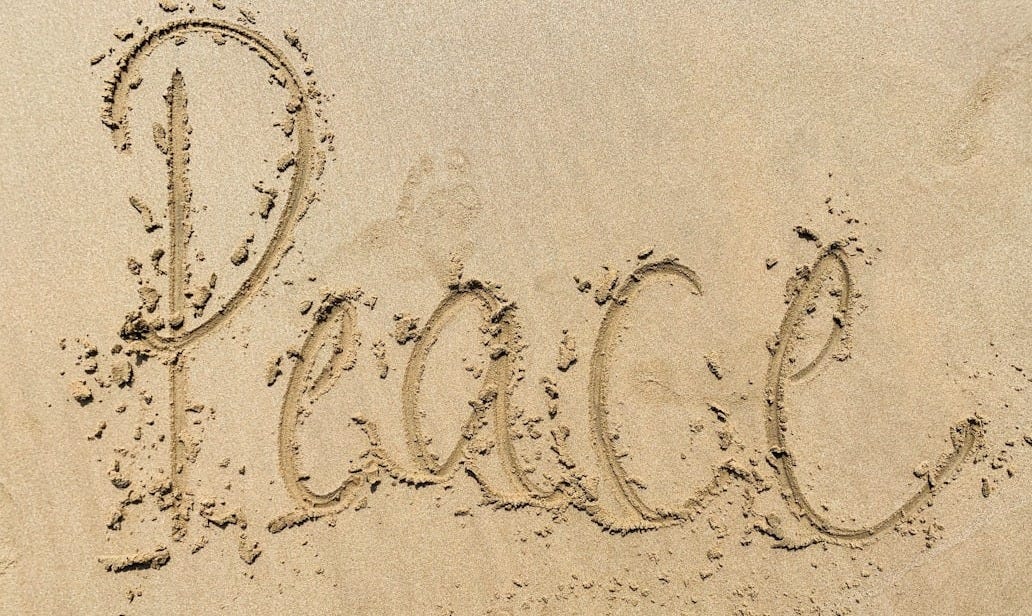
Just three days into 2026, the Bingo Card is already filling up. While some things are hard to predict, others are not. Waking up to the news that the United States had attacked Venezuela was a predictable event since the administration and military had been saber-rattling for months.
The president even told Congress, whom he chose not to inform of the impending strike, that everyone should have figured it out. “But I have to say they knew we were coming at some point, you know, we had a lot of ships out there, they sort of knew what we were [going to do].”
Fair, it didn’t surprise me. But extracting the Venezuelan president and his wife? No, did not have that on my 2026 Bingo card. Though, he was a notoriously evil leader and the country will not regret him being gone.
In this case, the Bingo card is not as important as the motivations behind filling it. It is impossible to pardon drug dealers and then make any credible claim that this strike was about drugs. There are distractions, and then there is truth. The truth is evident in the president’s own words, though I am not sure who exactly is meant to profit—their country or ours. Time will tell.
“"We're going to have our very large United States oil companies, the biggest anywhere in the world, go and spend billions of dollars to fix the badly broken infrastructure, the oil infrastructure, and start making money for the country."
Meanwhile, as the powerful make moves on the world chessboard, a group of monks continues their march to Washington, D.C., in support of peace. I certainly didn’t have that one on my Bingo card. Despite that, the rousing support they are receiving does not surprise me. There is something so alluring in the monk’s determination to seek peace in a world that cannot seem to consider any answers except violence and war.
Our nation is caught in cycles of violence that began long before our country existed. The following quote from Trauma in the Pews explains why this cycle is so difficult to break. When the world is in fight mode, any answer that doesn’t involve some level of violence—including some theologies—is called weak.
During our country’s history, there have been around a hundred wars or rebellions in which our military has been involved. . . . We are a warring nation and for many who were traumatized, the war within them never ended. Many children of World War II and Vietnam veterans share about their parents’ unpredictable tempers, mood swings, and alcohol abuse. All of these are common effects of unresolved trauma. The generations traumatized by the world wars—not to mention the Dust Bowl and Great Depression— were flocking to churches in the 1950s with the belief that spirituality was the answer.
If spirituality were the answer, why are we not a peace-seeking nation? How quickly we forget that Jesus said, “Put your sword back in its place, for all who draw the sword will die by the sword.” (Matthew 26:52 NIV) We cannot have a peaceful nation while striking out at other sovereign countries! While we long for peace and cheer for the monks, we must recognize that the influence of the church has not reduced our nation’s tendency to warmonger. Quite the opposite.
Why is this? I believe it is because the church’s version of salvation does not remove the trauma-based fight responses. Nor does it heal the scarcity mindset that searches the world for more. Only healing does this, which ironically is the true meaning of salvation. “The Greek words we often translate as salvation in the Bible are sózó and sótéria. These are the same words we commonly translate as healing” (Ben Cremer as quoted in Trauma in the Pews).
The prophet Jeremiah eloquently expressed where we now find ourselves.
“For from the least of them to the greatest of them,
Everyone is greedy for gain,
And from the prophet to the priest
Everyone deals falsely.
They have healed the brokenness of My people superficially,
Saying, ‘Peace, peace,’
But there is no peace.
Were they ashamed because of the abomination they had done?
They were not ashamed at all,
Nor did they know even how to be ashamed.
Therefore they will fall among those who fall;
At the time that I punish them,
They will collapse,” says the Lord. (Jeremiah 6:13-15 NASB)
Ultimately, it will be about peace. I have little hope for influencing the world in any significant way, but I can continue to heal and set down the trauma responses that would make me no different than those who anger me. I do not need to agree with people when I set down the sword. I do not need to stop addressing injustice as I set down the sword. It isn’t easy to find ways to be a truthteller without sliding into fight mode. But if the monks can find a way, so can I.